
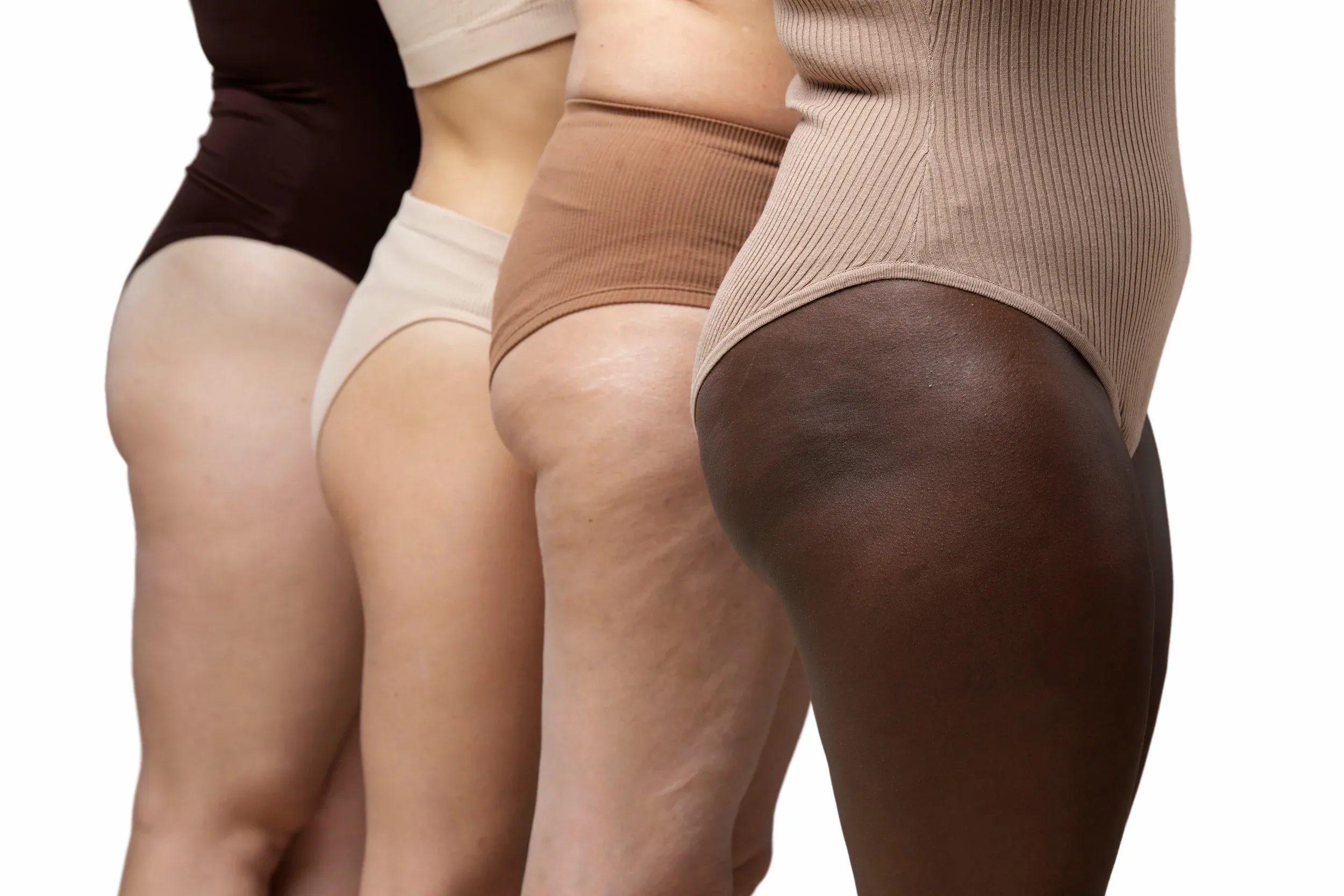


Cellulite has five primary structural causes, all of which can be present at the same time. According to the FDA and clinical research from BTL (the maker of Emtone), effective treatment must address loose skin, poor circulation, weakened collagen, fluid retention, and the fibrous bands that pull skin downward. Single-mechanism approaches like topical creams or basic massage cannot reach all five layers, which is why results have historically been disappointing.
Hormones explain why cellulite is far more common in women. Estrogen influences fat distribution, connective tissue strength, and circulation in the thighs, hips, and buttocks. As estrogen fluctuates with puberty, pregnancy, perimenopause, and menopause, the dermis thins, collagen weakens, and fat lobules become more visible at the skin surface. Genetic predisposition, family history of cellulite, and ethnicity also influence the size and arrangement of these fat chambers, which is why some patients develop dimpling at a younger age and lower body weight than others.
Lifestyle factors compound the structural picture. Prolonged sitting, dehydration, low movement, smoking, and a diet high in processed sodium reduce circulation and lymphatic drainage, which lets fluid pool around fat lobules and exaggerates the dimpling. Age-related collagen loss, similar to what drives facial sagging and skin laxity, gradually thins the dermis on the body too, making cellulite and crepey skin more visible over time. Treatment plans that combine in-office radiofrequency with hydration, movement, and hormone optimization deliver the most durable smoothing.


